This is a mathematical calculation only, not investment advice.
Stock Price Percentage Change Calculator – Measure Your Gain or Loss
This calculator shows the percentage gain or loss between a **buy price** and a **sell price**. If you enter the number of shares, it also calculates your **total dollar gain or loss**, making it useful for quick profit checks, trade summaries, and basic investment comparisons. It is ideal for: - checking profit or loss on a trade - comparing buy‑to‑sell outcomes - evaluating stock performance - calculating percentage returns - estimating total gain/loss for multiple sharesStock Price Percentage Change Formula
To calculate the percentage gain or loss, use: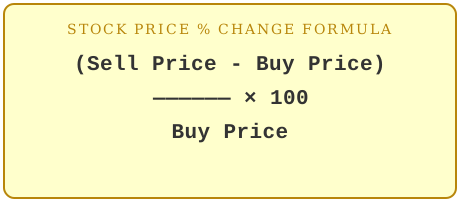
Where: - **buy price** = price you paid - **sell price** = price you sold at - **positive result** = gain - **negative result** = loss If you enter the number of shares, the calculator also computes: **(sell price − buy price) × shares**
Examples of Stock Price Percentage Change
Example 1: Profit on a tradeYou bought a stock at $40 and sold it at $46.
(46 − 40) / 40 × 100 = 6 / 40 × 100 = 15
That’s a 15% gain, before fees or taxes.
Example 2: Loss on multiple shares
You bought 50 shares at $22 and sold them at $19.
Percentage change: (19 − 22) / 22 × 100 = −13.64
Total loss: (19 − 22) × 50 = −$150
That’s a 13.64% loss, or $150 total.
Example 3: Large gain
A stock bought at $15 is now worth $33.
(33 − 15) / 15 × 100 = 120
That’s a 120% gain — the stock more than doubled.
When to Use This Calculator
Use this calculator for a **single buy‑to‑sell comparison**, such as: - selling shares you bought earlier - checking profit/loss on a trade - calculating return on a single position If you want a **smoothed annual growth rate** over several years, use the CAGR calculator. If you want to measure **day‑to‑day price swings**, use the volatility calculator.Frequently Asked Questions
Does this include fees, taxes, or dividends?No. This calculator only looks at price change. Trading fees, taxes, and dividends are not included.
Can the percentage change be over 100%?
Yes. If a stock more than doubles in price, the percentage gain will exceed 100%.
What if I sold at a loss?
Enter your sell price lower than your buy price — the calculator will return a negative percentage.
Related tools: CAGR calculator & volatility calculator.