Percentage Point Calculator – Compare Two Percentages Correctly
Percentage points measure the **absolute difference between two percentages**, without turning the comparison into a relative percent change. The abbreviation for percentage points is **“pp”** — for example, a rise from 20% to 30% is a **10 pp** increase. This calculator shows **both** results: - the **percentage point difference** (absolute gap) - the **relative percentage change** (how large the change is compared to the first percentage) These two results answer different questions and are often confused in news reports, finance, statistics, and everyday discussions. Percentage points tell you the **straight numerical difference**, while percent change tells you **how big the change is relative to the starting percentage**.Percentage Point Formula
The percentage point difference is simply: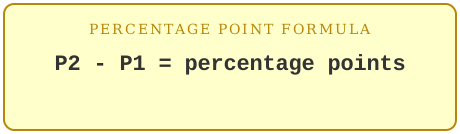
To find the **relative percent change**, use:
( P2 − P1 ) / P1 × 100
This shows how large the change is compared to the first percentage.
Examples of Percentage Points vs Percent Change
Example 1: Election resultsA political party scored 20% in the last election and 30% in this one.
Percentage points: 30 − 20 = 10 pp
Relative change: (30 − 20) / 20 × 100 = 50%
The party gained 10 percentage points, which is a 50% increase relative to its previous score.
Example 2: Interest rate increase
An interest rate rises from 2% to 2.5%.
Percentage points: 2.5 − 2 = 0.5 pp
Relative change: (2.5 − 2) / 2 × 100 = 25%
The rate rose by 0.5 percentage points, which is a 25% relative increase.
Example 3: Approval rating drop
Approval rating falls from 60% to 54%.
Percentage points: 54 − 60 = −6 pp
Relative change: (54 − 60) / 60 × 100 = −10%
Approval fell by 6 percentage points, a 10% relative decline.
When to Use This Calculator
Use this calculator whenever you are comparing two percentages directly — such as: - interest rates - approval ratings - tax rates - survey results - financial ratios Percentage points are ideal for describing **absolute differences**, while percent change is ideal for describing **relative differences**. For a deeper explanation of why these two results can differ so much, see the percentage points vs percentage change guide.Frequently Asked Questions
Why not just say “the rate increased by 0.5%”?That phrasing is ambiguous — it could mean **0.5 percentage points** or a **0.5% relative change**, which are very different amounts. Being explicit avoids confusion.
Does the order of the two percentages matter?
Yes. The calculation is always **second percentage minus first percentage**. Entering them in the wrong order flips the sign of the result.
Can percentage points be negative?
Yes. A negative percentage point difference means the second percentage is lower than the first.
Related tools: percentage points vs percentage change guide & percentage change calculator.