Percentage Change with Negative Numbers
Calculating percentage change becomes trickier when the starting value is negative. A negative starting value can flip the sign of the result, making an increase look like a decrease or vice versa. To avoid this, the correct formula uses the **absolute value** of the starting number in the denominator. This ensures the percentage change reflects the true size of the change, regardless of whether the values are below zero.Correct Formula for Negative Starting Values
When Vi (starting value) is negative, use: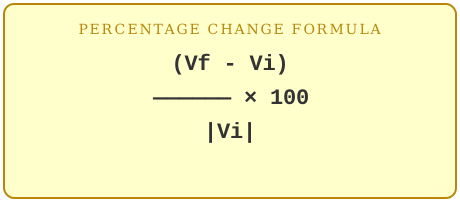
This formula prevents sign‑flips and gives a meaningful percentage change even when values cross zero or move deeper into negative territory.
Examples of Percentage Change with Negative Numbers
Example 1: Temperature dropA temperature drops from −20°F to −45°F. What is the percent change?
(−45 − (−20)) / |−20| × 100 = −25 / 20 × 100 = −125
The temperature dropped by 125%.
Example 2: Debt reduction
A bank balance moves from −$500 (overdrawn) to −$200. What is the percentage change?
(−200 − (−500)) / |−500| × 100 = 300 / 500 × 100 = 60
The balance improved by 60%.
Example 3: Crossing zero
A temperature rises from −10°C to 5°C. What is the percentage change?
(5 − (−10)) / |−10| × 100 = 15 / 10 × 100 = 150
The temperature rose by 150%, even though it crossed from below zero to above zero.
When to Use This Calculator
Use this calculator whenever your starting value is negative — such as temperatures below zero, debt, losses, or any measurement that can go below zero. If both values are positive, the regular percentage change calculator gives the correct result.Frequently Asked Questions
Why use the absolute value of the starting value?Because dividing by a negative number can flip the sign of the result, making increases look like decreases. Using the absolute value keeps the percentage change consistent and meaningful.
What if the starting value is exactly zero?
Percentage change is undefined when the starting value is zero, because you would be dividing by zero.
Does it matter if the ending value is also negative?
No. The formula works for any combination of negative and positive values, as long as the starting value is not zero.
Related tools: percentage change calculator & full formula guide.